
Learning to say no to a customer is one of the hardest skills in a beauty business. You want to be kind. You also want to be paid, to protect your time, and to protect your standards.
Every beauty vendor has faced it. A client asks for a refund after using half the serum. Another wants a bridal discount three days before the wedding. A third asks you to squeeze her in at 10pm.
The good news is that a no does not have to end the relationship. When you say it well, clients often respect you more. Here is how.

Why Saying No Feels So Hard in Beauty
Beauty is a relationship business. Clients share their skin concerns, their hair stories, and their big days with you. So refusing feels personal, even when it is not.
There is also fear. Many Nigerian beauty vendors worry that one refusal will become an angry post or a screenshot in a group chat. As a result, they say yes to everything and burn out.
However, a business that never says no has no standards. Clients notice that too. A clear boundary tells them you are professional and that your prices and policies mean something.
When You Should Say No to a Customer
Not every request deserves a yes. In beauty, a firm no is often right in these situations:
- Refunds on used products. Opened and half-used skincare cannot be resold.
- Heavy discounts on fixed prices. Constant haggling teaches clients that your rates are negotiable.
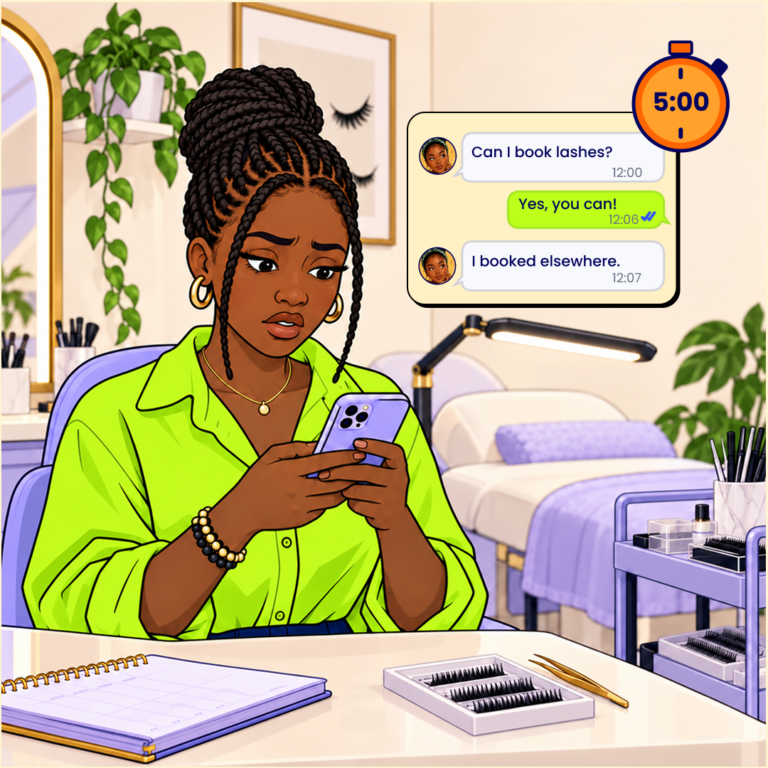
- Last-minute bookings that rush the work. A rushed bridal makeup or lash set hurts the result.
- Skipping a patch test or consultation. Safety comes before convenience.
- Free redos outside your policy. Fixing your own mistake is fair. Redoing a style the client changed her mind about is not.
- Requests outside your hours. Boundaries protect your energy and your quality.
One exception matters. If a client says a product caused a skin reaction, do not refuse. Listen first, ask for photos, and suggest she sees a doctor if it is serious. That is a safety issue, not a policy dispute.
A 5-Step Formula to Say No to a Customer Kindly
Use this structure for almost every refusal.
Step 1: Thank her. Appreciate that she reached out or booked with you. It softens the start.
Step 2: Say no clearly. Do not hide the answer in a long paragraph. Vague replies create false hope.
Step 3: Give one short reason. Keep it simple and honest. Long explanations sound defensive.
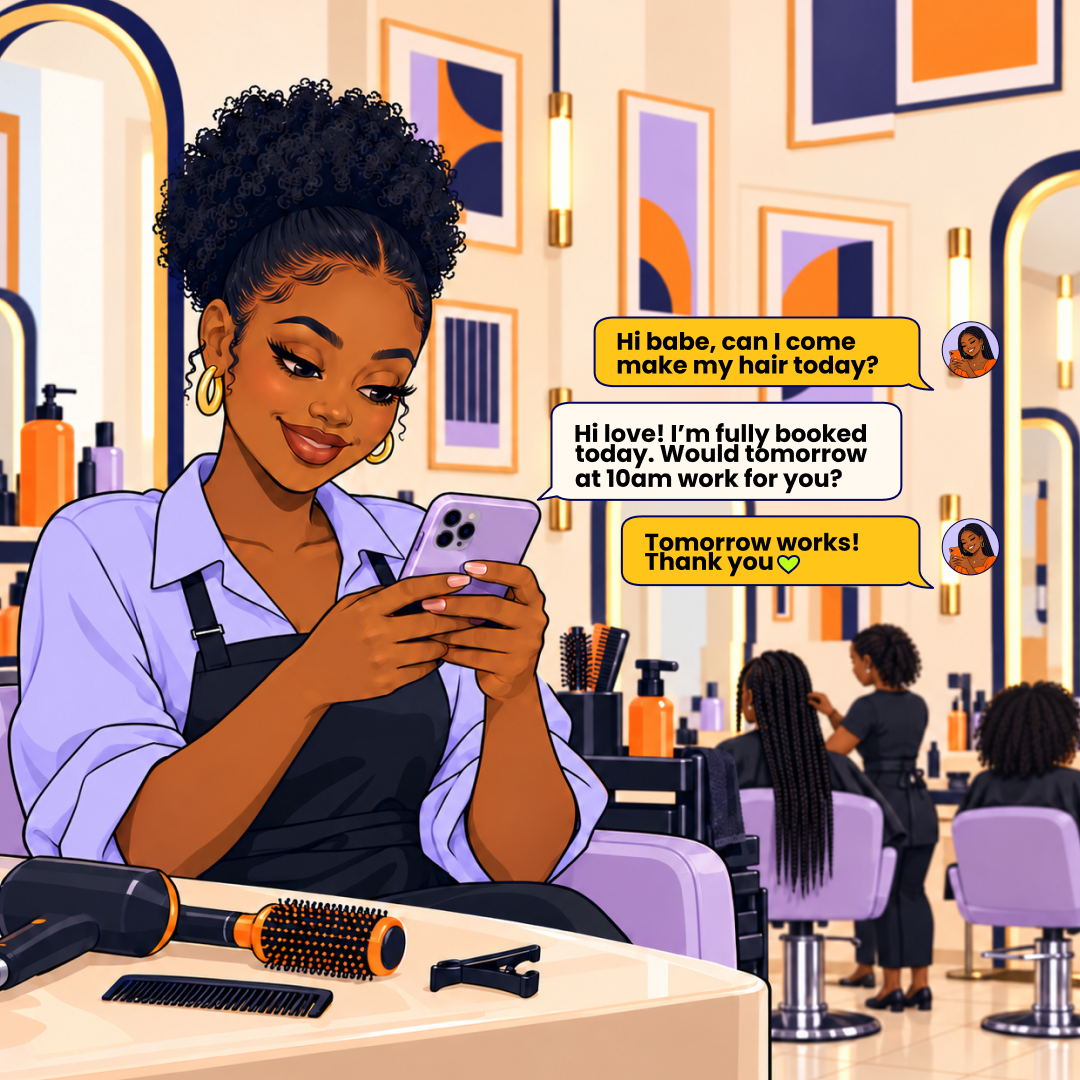
Step 4: Offer an alternative. This is the secret to keeping the client. Give her something you can do.
Step 5: Close warmly. End with an invitation, so she knows the door is still open.
Beauty Examples You Can Copy
Adjust these to fit your own voice.
Refund request on a used product:
“Hi Tola, thank you for telling us how it went. Because the product has been opened and used, we’re unable to offer a refund. However, I’d love to recommend a gentler option from our range. Would you like some suggestions?”
Discount request on bridal makeup:
“Hi Ada, congratulations on your wedding! Our bridal rates are fixed, so I can’t reduce the price. What I can do is add a complimentary lash application to your package. Shall I send the details?”
Late-night appointment request:
“Hi Zainab, thank you for reaching out. We’re no longer taking appointments after 7pm to keep our quality high. I have a slot tomorrow at 10am. Should I reserve it for you?”
Request to skip the patch test:
“Hi Chidinma, I understand you’re in a hurry. However, I can’t apply the product without a patch test, as it protects your skin. We can do the patch test today and book your full session for Thursday.”
Request to copy another stylist’s work exactly:
“Hi Funmi, I love that you’ve found a style you like. I can’t replicate another artist’s work exactly, but I can create something similar with my own touch. Can I send you a few of my previous looks?”
Notice the pattern. Each reply is polite, firm, and offers a next step.
What to Avoid When You Refuse a Client
Even a good no can go wrong. Avoid these mistakes.
- Over-apologising. Saying sorry five times makes your decision sound negotiable.
- Making up excuses. Clients can usually tell, and it damages trust.
- Sounding annoyed. Tone travels through text, so read your message before sending.
- Naming and shaming. Never criticise the client in public.
- Giving in to pressure. If you reverse your answer after a push, every future client will push too.
Put Your Policies in Writing
The easiest no is the one the client already expects. So write your policies down before anyone asks.
Include your refund rules, cancellation terms, deposit requirements, working hours, and redo policy. Then share them in three places: your pinned post, your booking confirmation, and your saved replies.
When a client pushes back, you can say, “As per our policy shared at booking, I’m unable to do that.” It sounds professional, not personal. As a result, many arguments never start.

How a Good No Builds Your Reputation
Here is something many vendors miss. A well-handled refusal often earns praise later.
Clients remember how you made them feel. When you stay calm, respectful, and fair, they trust you more. In fact, many leave reviews saying things like “she was professional even when she couldn’t give me what I wanted.”
That is why reviews matter. A platform like Parrot lets clients share their full experience on your business profile, including how you handled a tricky moment. Future clients can read it before they book. Over time, that record shows you are consistent, fair, and safe to buy from.
A simple habit helps. After you resolve a difficult request, send the client a link to review her experience. If she feels respected, she will often be glad to.
Final Thoughts
You cannot say yes to everything, and you should not try. A beauty business with clear boundaries is easier to run, easier to trust, and easier to recommend.
Remember the formula: thank her, say no clearly, give one reason, offer an alternative, and close warmly. Then write your policies down so the conversation is easier next time.
When you say no to a customer with kindness and clarity, you protect your business and often keep the client for years.